Insurance is a critical part of protecting your business assets, which means it’s equally important to understand what types of coverage you need.
Most businesses with physical assets opt for commercial property insurance, but there’s another option that offers an important range of coverage: inland marine insurance.
In this article, we’ll compare these coverage types and discuss benefits of each, so you can make the best decision for your business.
What’s the difference between inland marine and commercial property coverage?
Commercial property insurance covers stationary assets: buildings, office furniture, computers, machinery, inventory, and so on. The coverage is limited to the fixed location where the business resides.
Inland marine insurance, despite what it sounds like, has nothing to do with water. According to the Insurance Information Institute, inland marine insurance covers assets that are not at a fixed location. These movable assets are typically not covered under general commercial property insurance, so inland marine coverage helps bridge that gap.
How to know if your business needs inland marine insurance
Your business may need inland marine coverage if:
- You have property or equipment used at various locations
- You transport your goods via your owned vehicles or a common carrier
- You are a common carrier
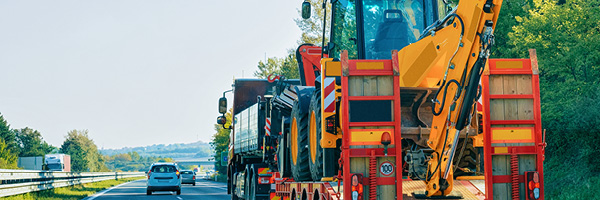
Inland marine insurance is often required in construction, transportation, logistics, technology, event planning, and mobile service industries. This could include everything from large-scale construction operations to family-owned landscaping businesses—if a company relies on high-ticket equipment and travels with it frequently, they will likely benefit from inland marine coverage.
"The most common inland marine classes include Contractor’s Equipment, which services the construction and contracting industries, and Builder’s Risk, which provides coverage for buildings in the course of construction,” says Jill Morgan, Assistant Vice President of CL Products for Grange Insurance. “Other industries and areas that commonly employ inland marine insurance include equipment dealers, mobile equipment other than contractor’s equipment, golf courses, athletic equipment, medical equipment, audio/visual equipment, and party rental equipment.”

Learn about our
Business Insurance
How to know if your business needs commercial property insurance
Since commercial property insurance covers physical business assets from fire, theft, and other damage, almost every business needs this type of coverage. Even home-based businesses should have commercial property insurance, as personal property insurance often doesn’t cover business assets used at home.
Commercial property insurance typically covers:
- Your business’s building and structures
- Equipment, supplies, and furniture
- Inventory and raw materials
- Items stored on your premises
- Business interruption (loss of income due to a halt in operations)
If you own a business of any size that has physical assets, commercial property insurance is important for preventing losses due to unforeseen events.
How to know if your business needs both
It is quite common for a business to have both commercial property and inland marine insurance. In general, if your business has an office location and mobile crews who operate in the field, you likely need to pair your commercial property coverage with inland marine.
Some examples of these types of businesses include:
- Repair shops: Commercial property covers the shop’s location and equipment, while inland marine covers customer items that are in the shop’s possession while they’re being fixed.
- Photography and videography studios: Commercial property covers the studio location and any equipment on-site, and inland marine covers photo equipment that is transported to photo shoot locations.
- Construction and contracting services: Commercial property covers the office location and any assets residing there, and inland marine covers valuable tools and equipment being used or temporarily stored at a job site.
Get advice from an expert
Determining what type of coverage your business needs can be confusing and overwhelming. If you’re weighing insurance policies for your business, it’s always wise to talk to an expert. Your local independent insurance agent can help assess your business type, assets, and potential liabilities, then provide tailored advice on which options best fit your needs.
Get in touch with a Grange independent agent today to discuss commercial coverage possibilities and ways to save on your policy.
References
- Insurance Information Institute (III)
- International Risk Management Institute (IRMI)
Coverages described herein may not be available in all states. Please contact a local independent Grange agent for complete details on coverages and discounts. If the policy coverage descriptions herein conflict with the language in the policy, the language in the policy applies. The material provided above is for informational, educational, or suggestion purposes and does not imply coverage. WE RESERVE THE RIGHT TO REFUSE TO QUOTE ANY INDIVIDUAL PREMIUM RATE FOR THE INSURANCE HEREIN ADVERTISED. Grange Insurance policies are underwritten by Grange Insurance Company, Trustgard Insurance Company, Grange Indemnity Insurance Company, Grange Insurance Company of Michigan and Grange Property & Casualty Insurance Company*. Not all companies are licensed in all states. *Not licensed in Pennsylvania.